The term “Rainbow Coalition” refers to two major social and political movements in modern American history: the original grass-roots movement formed in Chicago during the late 1960s, and the national political organization launched in the 1980s that lives on today as the Rainbow PUSH Coalition.
1. The Original Rainbow Coalition (1969)
In 1969, Chicago was deeply segregated and fraught with tension between working-class communities and local authorities. Fred Hampton, the 21-year-old chairman of the Illinois Chapter of the Black Panther Party, recognized that low-income Black, Latino, and white residents were struggling against similar systemic issues: police brutality, substandard housing, and economic exploitation.
Hampton set out to form an unprecedented cross-racial alliance. The key founding factions included:
-
The Illinois Black Panther Party: Led by Fred Hampton and Bob Lee.
-
The Young Lords Organization: A Puerto Rican street gang transformed into a civil rights group, led by José “Cha Cha” Jiménez.
-
The Young Patriots Organization: A group of working-class white migrants from Appalachia, led by William “Preacherman” Fesperman.
Together, they declared common ground across racial lines to demand structural reform and deliver community services, including free breakfast programs and community health clinics.
Key Founders
-
Fred Hampton: The primary visionary whose oratorical power and organizing skills brought ideological rivals together.
-
José “Cha Cha” Jiménez: Co-founder who redirected the energy of the Young Lords toward political advocacy and urban renewal.
-
William “Preacherman” Fesperman & Bob Lee: Key organizers who built trust between working-class white communities and Black activists.
The original coalition faced heavy suppression from government authorities under the FBI’s COINTELPRO, leading to Fred Hampton’s assassination during a police raid in December 1969. Though short-lived, the movement demonstrated the power of multi-racial political solidarity.
2. The National Rainbow Coalition (1984)
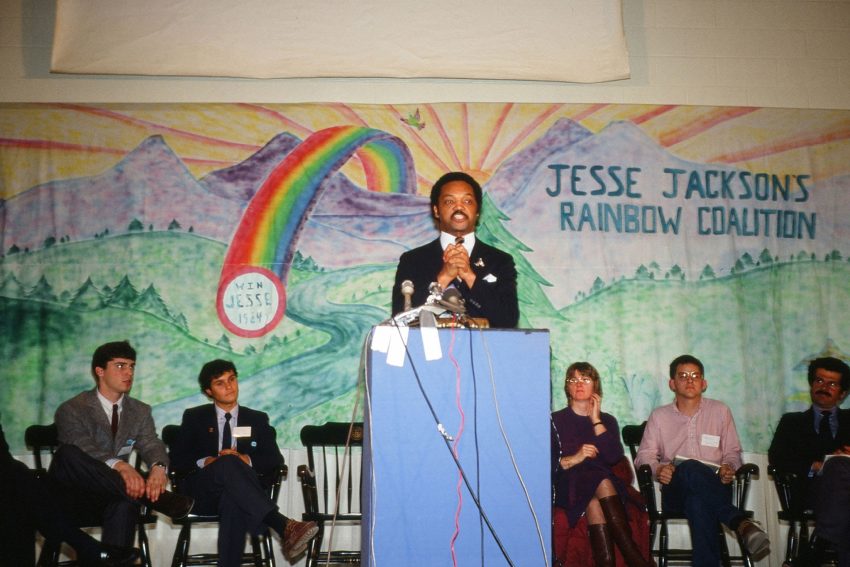
In 1984, civil rights leader Reverend Jesse Jackson adopted the “Rainbow Coalition” concept to build a national political platform during his bid for the Democratic presidential nomination.
Jackson’s movement sought to unite diverse constituencies that felt marginalized by contemporary political and economic policies: African Americans, Hispanic Americans, Asian Americans, working-class families, trade unionists, feminists, and LGBTQ+ advocates.
Key Founders & Structure
-
Rev. Jesse Jackson: The founder and central driving figure who leveraged his civil rights platform to create a coalition focused on voter registration, social equity, and economic opportunities.
-
Merger with Operation PUSH (1996): Jackson merged the National Rainbow Coalition with his existing social advocacy group, Operation PUSH (People United to Serve Humanity, established in 1971).
The resulting organization, the Rainbow PUSH Coalition, remains active in advocating for civil rights, affirmative action, equal opportunity in corporate governance, and political representation.
Evolution of the Movement
Summary Comparison
| Era | Key Founder(s) | Primary Focus | Legacy |
| 1969 Movement | Fred Hampton, José “Cha Cha” Jiménez, William Fesperman | Grassroots community survival, anti-poverty, anti-police brutality | Model for cross-racial community organizing |
| 1984 Coalition | Rev. Jesse Jackson | Electoral politics, voter registration, minority economic participation | Paved the path for modern progressive multi-ethnic voter mobilization |