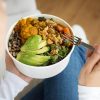

7-Day Low-Sodium Meal Plan for Heart Failure Management
By Wisdom Ugochukwu Lambert | Latest Health Update for Gossiphome TV
Managing heart failure effectively requires strict dietary control over three primary variables: sodium intake (capped under 1,500–2,000 mg/day), fluid volume (typically restricted to 1.5–2.0 L/day), and potassium balance. Sodium causes the body to retain excess water, increasing circulating blood volume and putting stress on an already weakened heart muscle.
Daily Clinical Targets
-
Total Sodium Target: $<1,500\text{ mg}$ per day
-
Fluid Limit Target: $1.5\text{ L}$ ($1,500\text{ mL}$) to $2.0\text{ L}$ ($2,000\text{ mL}$) per day
-
Potassium Range: $2,000\text{–}3,000\text{ mg}$ per day (Adjust based on lab values and medication class)
Fluid Accounting Rule: Every liquid ingested—including water, tea, coffee, soups, and high-water fruits—must be logged. High-water foods count toward your total daily fluid allowance at approximately 80–90% of their total weight.
READ ALSO: Top 10 Best Fruits For Heart Failure Maintenance: A Doctor-Approved Dietary Guide
7-Day Heart Failure Maintenance Menu
Day 1
-
Breakfast: $1/2$ cup rolled oats cooked in $1$ cup water, topped with $1/2$ cup fresh blueberries ($30\text{ mL}$ liquid count) and $1$ tbsp ground flaxseed. (Sodium: 5 mg | Fluid: 270 mL)
-
Lunch: $3\text{ oz}$ grilled skinless chicken breast on a whole-wheat wrap with lettuce, tomato, $1/4$ avocado, and lemon-herb drizzle. Side: $1$ small apple. (Sodium: 180 mg | Fluid: 120 mL)
-
Dinner: $4\text{ oz}$ baked salmon seasoned with dill and garlic powder, $1/2$ cup cooked quinoa, and $1$ cup steamed broccoli. (Sodium: 110 mg | Fluid: 100 mL)
-
Snack: $1/2$ cup plain low-fat Greek yogurt mixed with $1/4$ cup sliced strawberries. (Sodium: 45 mg | Fluid: 120 mL)
-
Total Daily Estimates: ~340 mg Sodium | ~610 mL Meal Fluid (Leaves ~890–1,390 mL budget for beverages)
Day 2
-
Breakfast: Scrambled egg whites ($2$ large) with spinach and tomato cooked in $1\text{ tsp}$ olive oil, served with $1$ slice unsalted whole-grain toast. (Sodium: 140 mg | Fluid: 50 mL)
-
Lunch: Low-sodium lentil salad ($3/4$ cup cooked lentils, diced cucumbers, bell peppers, $1\text{ tbsp}$ olive oil, apple cider vinegar). (Sodium: 25 mg | Fluid: 80 mL)
-
Dinner: $4\text{ oz}$ roasted turkey breast, $1/2$ medium baked sweet potato (no added salt), and $1$ cup steamed green beans. (Sodium: 95 mg | Fluid: 90 mL)
-
Snack: $1\text{ oz}$ (small palmful) unsalted raw almonds and $1/2$ cup fresh raspberries. (Sodium: 2 mg | Fluid: 50 mL)
-
Total Daily Estimates: ~262 mg Sodium | ~270 mL Meal Fluid
Day 3
-
Breakfast: Smooth oat bowl ($1/2$ cup dry oats cooked in almond milk), topped with $1/2$ sliced banana and a pinch of cinnamon. (Sodium: 80 mg | Fluid: 280 mL)
-
Lunch: $3\text{ oz}$ canned low-sodium white tuna packed in water, mixed with $1\text{ tbsp}$ olive-oil mayonnaise, wrapped in romaine lettuce leaves. Side: $1$ small pear. (Sodium: 160 mg | Fluid: 130 mL)
-
Dinner: $4\text{ oz}$ grilled cod with herbs, $1/2$ cup brown rice, and $1$ cup roasted zucchini and yellow squash. (Sodium: 85 mg | Fluid: 110 mL)
-
Snack: $1$ cup unsalted air-popped popcorn. (Sodium: 1 mg | Fluid: 0 mL)
-
Total Daily Estimates: ~326 mg Sodium | ~520 mL Meal Fluid
Day 4
-
Breakfast: $1/2$ cup unsalted cottage cheese with $1/2$ cup diced fresh papaya ($100\text{ mL}$ liquid count). (Sodium: 320 mg | Fluid: 170 mL)
-
Lunch: $1$ cup homemade low-sodium vegetable soup (carrots, green beans, celery, low-sodium broth) with $3\text{ oz}$ baked tofu or chicken strips. (Sodium: 190 mg | Fluid: 240 mL)
-
Dinner: $4\text{ oz}$ lean baked pork tenderloin with garlic and rosemary, $1/2$ cup mashed cauliflower, and $1$ cup steamed asparagus. (Sodium: 110 mg | Fluid: 120 mL)
-
Snack: $1/2$ small orange. (Sodium: 0 mg | Fluid: 60 mL)
-
Total Daily Estimates: ~620 mg Sodium | ~590 mL Meal Fluid
Day 5
-
Breakfast: Overnight chia pudding ($2\text{ tbsp}$ chia seeds, $1/2$ cup unsweetened almond milk) topped with $1/4$ cup blackberries. (Sodium: 90 mg | Fluid: 140 mL)
-
Lunch: Quinoa bowl ($1/2$ cup quinoa, $3\text{ oz}$ grilled chicken, $1/2$ cup chopped cucumber, parsley, lemon dressing). (Sodium: 120 mg | Fluid: 80 mL)
-
Dinner: $4\text{ oz}$ baked trout, $1/2$ cup wild rice, and $1$ cup sauteed kale in garlic and olive oil. (Sodium: 95 mg | Fluid: 70 mL)
-
Snack: $1\text{ oz}$ unsalted walnuts. (Sodium: 1 mg | Fluid: 0 mL)
-
Total Daily Estimates: ~306 mg Sodium | ~290 mL Meal Fluid
ALSO CHECK:Boiled Eggs and Diabetes: Impact on Blood Sugar, Insulin, and HbA1c
Day 6
-
Breakfast: $1$ slice unsalted whole-grain toast topped with $1/4$ mashed avocado and $1$ poached egg. (Sodium: 75 mg | Fluid: 20 mL)
-
Lunch: $1$ cup unsalted chickpea salad (chickpeas, diced tomato, onion, cilantro, lime juice). Side: $1/2$ cup fresh sliced strawberries. (Sodium: 35 mg | Fluid: 100 mL)
-
Dinner: $4\text{ oz}$ sirloin steak (trimmed of fat, grilled with black pepper), $1/2$ medium baked potato, and $1$ cup steamed Brussels sprouts. (Sodium: 90 mg | Fluid: 80 mL)
-
Snack: $1/2$ cup plain low-fat yogurt. (Sodium: 60 mg | Fluid: 100 mL)
-
Total Daily Estimates: ~260 mg Sodium | ~300 mL Meal Fluid
Day 7
-
Breakfast: Oatmeal ($1/2$ cup cooked) with $1\text{ tbsp}$ unsalted peanut butter and $1/4$ cup blueberries. (Sodium: 10 mg | Fluid: 250 mL)
-
Lunch: Whole-wheat pita pocket stuffed with $3\text{ oz}$ roasted turkey, shredded cabbage, and low-sodium tahini drizzle. (Sodium: 210 mg | Fluid: 60 mL)
-
Dinner: $4\text{ oz}$ grilled wild salmon, $1/2$ cup barley, and $1$ cup steamed green beans with lemon juice. (Sodium: 105 mg | Fluid: 90 mL)
-
Snack: $1$ small apple with a sprinkle of cinnamon. (Sodium: 0 mg | Fluid: 100 mL)
-
Total Daily Estimates: ~325 mg Sodium | ~500 mL Meal Fluid
Daily Fluid Tracking Standard Protocol
To manage daily intake against a standard 1,500 mL (1.5 L) fluid limit:
Total Daily Fluid Allowance: 1,500 mL
├── Meal Solid/High-Water Content Deductions: ~300 - 600 mL
├── Prescribed Medication Water Allowance: ~150 - 200 mL
└── Remaining Beverage Allowance (Water/Tea): ~700 - 1,050 mL
Fluid Control Tips
-
Use a Measured Water Pitcher: Fill a designated 1.5 L container with water every morning. Every time you consume liquid or high-water foods, pour out an equal volume from the pitcher. When the pitcher is empty, your fluid limit for the day is reached.
-
Ice Cube Control: $1$ standard ice cube is equivalent to roughly $15\text{ mL}$ of water. Always count ice cubes toward your liquid log.
-
Thirst Management Without Liquids: Suck on hard, sugar-free candies or frozen fruit pieces (like a frozen blueberry) rather than drinking water to ease dry mouth symptoms.
Summary
Maintaining stability in heart failure requires consistency in low-sodium food choices and rigorous fluid tracking. Using fresh herbs, spices, citrus, and natural aromatics allows you to maximize flavor without relying on salt.
Stay tuned to Gossiphome TV for continued health insights, expert dietary strategies, and medical updates from Wisdom Ugochukwu Lambert.