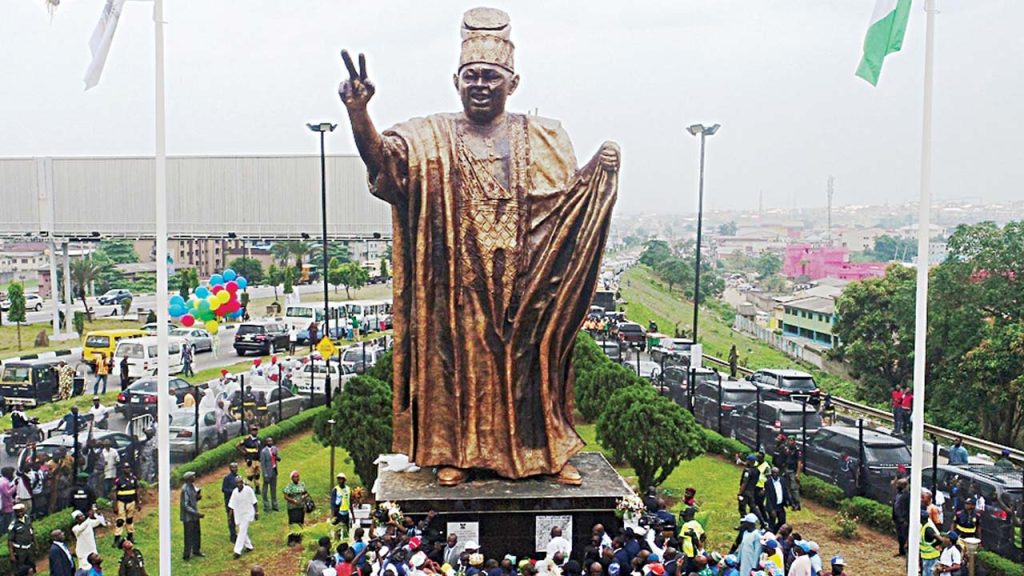

Beyond Independence: 5 Modern Democracy Heroes Who Fought for Nigeria’s Freedom
In our previous feature, we explored the legendary history of the colonial-era patriots who broke the chains of British imperial rule to deliver an independent Nigeria in 1960. However, the struggle for genuine liberty and self-determination did not end when t.he Union Jack was lowered.
Following decades of military rule, harsh decrees, suspended constitutions, and civil rights suppressions, a new generation of freedom fighters emerged. These brave individuals did not fight foreign occupiers; they fought domestic tyranny to deliver the democracy Nigerians enjoy today.
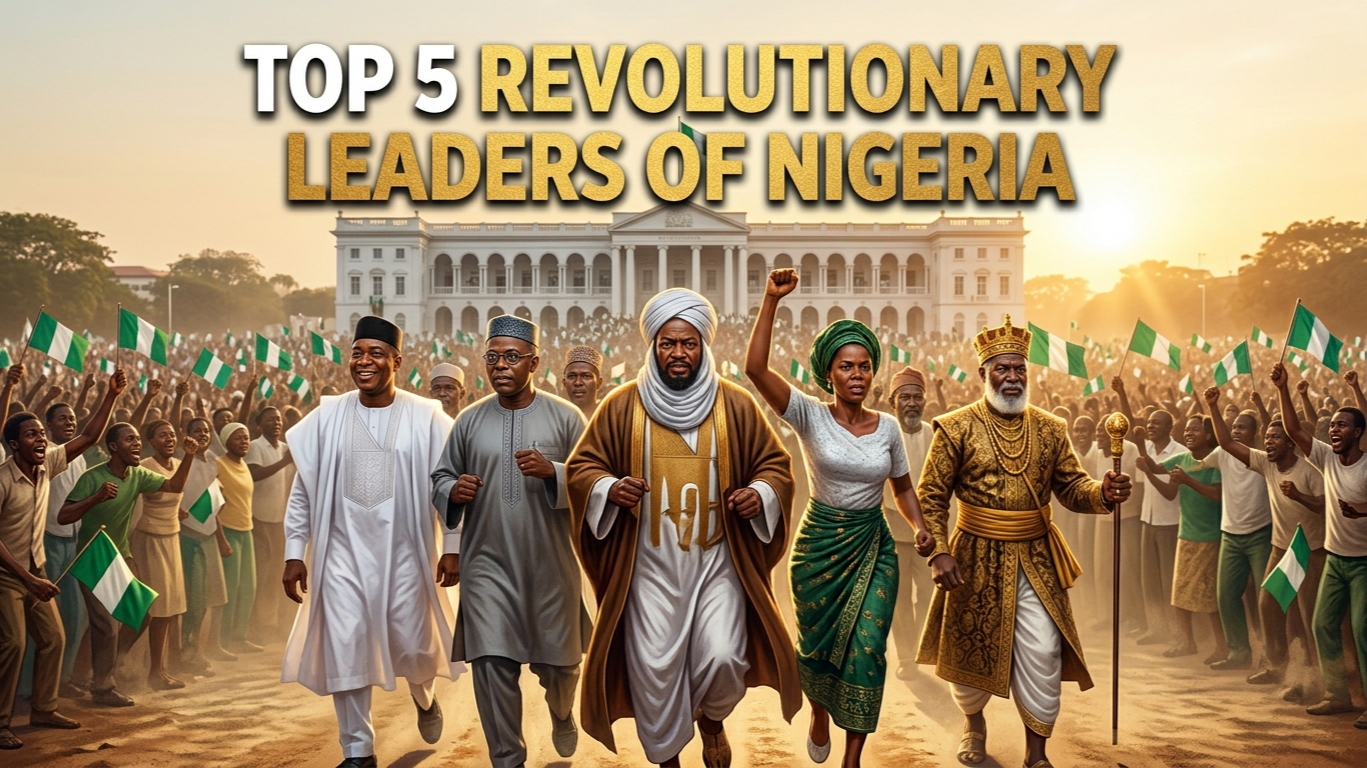
As a direct follow-up to our Top 10 Freedom Fighters in Nigeria, Gossiphome TV spotlights 5 iconic modern democracy heroes whose sacrifices shaped Nigeria’s Fourth Republic.
1. Chief Moshood Kashimawo Olawale (MKO) Abiola (1937–1998)
Chief MKO Abiola is universally remembered as the ultimate martyr of modern Nigerian democracy. A charismatic businessman and philanthropist, Abiola ran for the presidency in the historic June 12, 1993 election—an election widely regarded by local and international observers as the freest and fairest in Nigeria’s history.
When the military regime arbitrarily annulled the election results, Abiola refused to yield his mandate. Declaring himself president based on the democratic will of the people, he was arrested and incarcerated in 1994. Abiola spent four years in solitary confinement, persistently refusing to abandon his mandate until his tragic death in custody on July 7, 1998. His sacrifice paved the way for the return to civilian rule in 1999.
2. Chief Gani Fawehinmi, SAN (1938–2009)
Affectionately dubbed the “Senior Advocate of the Masses,” Gani Fawehinmi was an relentless human rights lawyer and activist who turned the courtroom into a battleground against authoritarianism.
Over a career spanning four decades, Gani was arrested, detained, and jailed over 40 times by successive military regimes for defending political prisoners, student activists, and persecuted journalists. Unawed by state security apparatuses, he challenged illegal decrees, organized peaceful pro-democracy rallies, and established the National Conscience Party (NCP) to challenge dictatorial rule.
3. Alhaja Kudirat Abiola (1951–1996)
When her husband, MKO Abiola, was imprisoned by the military regime, Alhaja Kudirat Abiola stepped forward as one of the most fearless leaders of the pro-democracy movement. She mobilized market women, labor unions, and civil rights groups to demand the validation of the June 12 election and the release of political detainees.
Kudirat spoke out boldly against state oppression, organizing strikes and international campaigns that exposed human rights violations in Nigeria. Her uncompromising courage made her a high-value target; on June 4, 1996, she was assassinated on the streets of Lagos, cementing her place as a true heroine of Nigerian freedom.
4. Chief Anthony Enahoro (1923–2010)
While Chief Anthony Enahoro earned his place in history by moving the 1953 independence motion, his fight for freedom was far from complete in 1960. Decades later, when military dictatorships threatened to destroy the nation, the aging statesman returned to the frontline of resistance.
In the 1990s, Enahoro co-founded the National Democratic Coalition (NADECO), an overarching organization that united activists, politicians, and civil society groups against military rule. Despite his advanced age, he endured harassment and exile while advocating internationally for the restoration of democracy in Nigeria.
5. Ken Saro-Wiwa (1941–1995)
Ken Saro-Wiwa was a renowned writer, television producer, and environmental rights activist who pioneered the movement for indigenous rights and environmental justice in the Niger Delta. As the leader of the Movement for the Survival of the Ogoni People (MOSOP), Saro-Wiwa led non-violent campaigns against corporate exploitation and military repression.
Saro-Wiwa highlighted how marginalization and environmental destruction infringed upon human freedom. Despite facing intense military brutality, he remained steadfast in his peaceful activism until his controversial execution alongside eight Ogoni colleagues in 1995—an act that sparked international outrage and isolated the regime.
The Continuing March for Freedom
The stories of these modern democracy heroes serve as a reminder that freedom is an ongoing pursuit. While our early nationalists won Nigeria’s sovereignty from colonial rule, these democracy icons risked everything to ensure that power ultimately belongs to the Nigerian people.
Follow Gossiphome TV for more compelling features on history, culture, and iconic figures shaping West Africa.