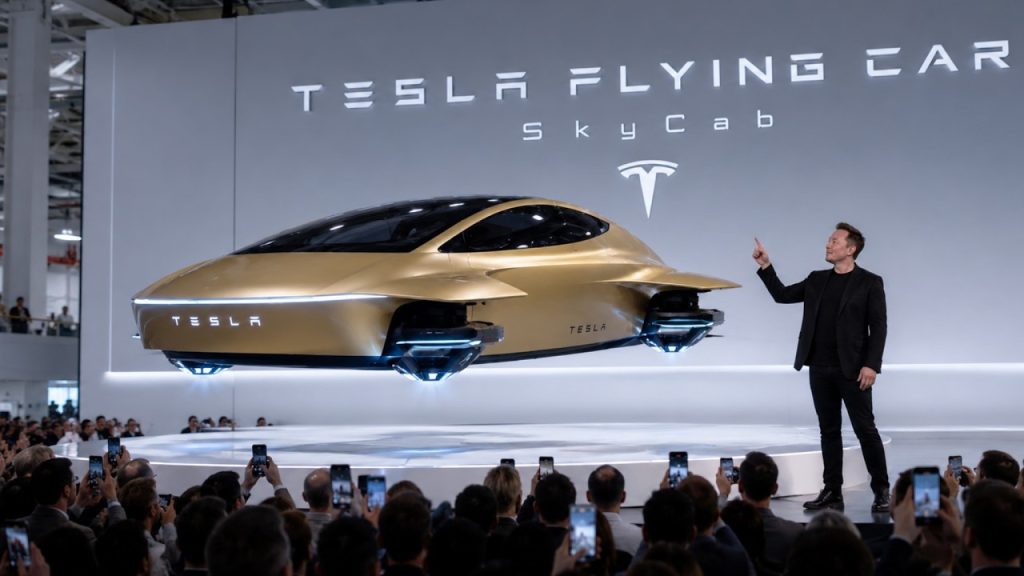

Elon Musk’s Flying Car: Valuation, Technology, and Global Availability
Category: Latest Technology Updates
Introduction: The Promise of Flying Vehicles
The concept of a flying car has captivated science fiction enthusiasts and technology leaders for decades. When tech mogul Elon Musk hinted at integrating rocket technology into consumer vehicles, it sparked intense public debate across the global technology ecosystem.
While many consumers expect a traditional flying automobile capable of sustained long-distance flight, Musk’s approach focuses on high-pressure cold-gas thruster technology integrated into electric sports cars. At the same time, venture-backed companies like Alef Aeronautics—backed by early SpaceX investors—are building true eVTOL (electric vertical takeoff and landing) vehicles, leading many to associate both initiatives with Musk’s broader transportation ecosystem.
1. Defining Elon Musk’s “Flying Car”: The Tesla Roadster SpaceX Package
When discussing Elon Musk’s involvement in airborne vehicles, the primary focus centers on the Tesla Roadster with the SpaceX Package.
Key Specifications & Mechanics
-
Propulsion System: Utilizes cold-gas high-pressure air thrusters derived from SpaceX rocket technology.
-
Aerial Capability: Designed for brief aerial maneuvers, short hops, controlled levitation, and extreme acceleration rather than continuous altitude cruising.
-
Acceleration: Estimated 0 to 60 mph acceleration in under 1 second when leveraging thruster assistance.
-
Configuration: Replaces the rear seating area with composite pressure vessels (COPVs) to feed the thruster system.
2. Estimated Value and Market Pricing
Understanding the value of Musk-inspired flying vehicle technology requires comparing Tesla’s thruster-assisted sports car against dedicated flying car startups operating in the same domain.
| Vehicle Model | Creator / Investor Context | Estimated Price (USD) | Primary Flight Mechanism |
| Tesla Roadster (SpaceX Package) | Designed by Tesla / Elon Musk | $200,000 – $250,000+ | Cold-gas composite air thrusters |
| Alef Model A | Backed by SpaceX early investor Tim Draper | $299,999 | Distributed electric vertical propulsion (eVTOL) |
Value Proposition
-
Performance Value: Extreme speed capabilities paired with street-legal sports car functionality.
-
Collector Value: Limited initial production runs position these vehicles as high-yield luxury assets for early adopters.
-
Engineering Innovation: Integrates aerospace engineering directly into consumer electric drive trains.
3. Country Availability and Regional Regulatory Landscape
Deploying vehicles capable of airborne flight or thruster-assisted hops requires strict clearance from both highway safety commissions and aviation oversight boards.
                     [ Global Markets Overview ]
                                  |
         +------------------------+------------------------+
         |                                                 |
[ North America ]                                  [ International Markets ]
 - Primary Launch Region                            - Regulatory Evaluation Phase
 - FAA Special Airworthiness Clearances             - Strict EASA Standards (Europe)
 - US DOT & NHTSA Road Compliance                  - GCC Infrastructure Testing (UAE)
Primary Target Markets
-
United States: The initial launch pad for both Tesla’s manufacturing operations and FAA airworthiness testing. Pre-orders and regulatory testing environments are established primarily under US jurisdiction.
-
Canada & Mexico: Included in broader North American distribution networks, pending localized transport agency approval.
Secondary Target Markets (Pending Regulatory Approvals)
-
European Union: Subject to European Union Aviation Safety Agency (EASA) regulatory reviews and strict pedestrian protection standards regarding thruster outlets.
-
United Arab Emirates (UAE) & Saudi Arabia: High-demand markets actively constructing urban air mobility infrastructure and vertiport networks.
-
Asia-Pacific (Japan, South Korea, China): Rapidly growing markets for eVTOL certification and electric vehicle adoption, though regional airspace management laws apply.
Note on Pre-Orders: Pre-orders for thruster-assisted vehicles and affiliated flying car technology (like Alef’s Model A) are accepted globally via online reservation systems across more than 100 countries, subject to local road and airspace delivery timelines.
4. Key Challenges & Regulatory Hurdles
Despite strong consumer interest, widespread deployment faces significant industry challenges:
-
Airspace Regulation: Distinguishing between highway traffic law and low-altitude civil aviation rules.
-
Noise and Safety Concerns: Cold-gas thrusters generate intense air velocity, requiring designated operation zones.
-
Insurance Frameworks: Auto insurers and aviation underwriters are still developing hybrid coverage policies for land-air vehicles.
Final Thoughts
Elon Musk’s entry into aerial-capable automotive technology marks a bold shift in high-performance EV design. While full sustained flight remains governed by eVTOL platforms, thruster-assisted vehicles represent an extraordinary intersection of aerospace and automotive engineering. As regulatory bodies adapt to these innovations, global market expansion will determine how quickly this technology reaches public roads and skies.




Pingback: Tesla Flying Roadster Unveiled: Live Demonstration, 2028 Launch, and Market Battle - Gossiphome TV