
Nigeria Minimum Wage by State (2026): Full Breakdown of Who Pays Highest and Who Is Lagging
By Gossiphome TV News Desk | November 18, 2026
While negotiations in Abuja over a fresh national salary review dominate headlines, a quiet revolution—and a widening pay gap—has already taken shape across Nigeria’s 36 states. Since the National Minimum Wage (Amendment) Act established the ₦70,000 monthly floor in July 2024, subnational governments have charted vastly different paths.
By late 2026, roughly 20 states have pushed their public-sector minimum wages above the federal baseline, creating a reality where two civil servants performing identical duties in neighboring states can take home paychecks separated by more than ₦30,000 every month. Here is Gossiphome TV’s complete breakdown of how each state stacks up in 2026.
The Frontrunners: States Paying Well Above ₦70,000
Several state governors—buoyed by increased Federation Account Allocation Committee (FAAC) inflows and internally generated revenue—have significantly outpaced the federal government’s baseline.
| Tier | State(s) | Approved Monthly Wage | Key Notes & Scope (2026) |
| Top Leader | Imo | ₦104,000 | Highest in Nigeria (~49% above federal floor); effective since late 2025. |
| Runner-Up | Ebonyi | ₦90,000 | Upgraded from ₦70,000 in August 2025 across civil service grades. |
| Commercial Hubs | Lagos, Rivers | ₦85,000 | Applies to state public servants; Lagos has also signaled plans toward ₦100,000. |
| The ₦80,000 Club | Akwa Ibom, Bayelsa, Enugu, Niger, Oyo | ₦80,000 | Covers state and local government workers; Oyo added a ₦10,000 top-up allowance in 2026. |
| Upper-Mid Tier | Delta, Ogun | ₦77,000 | Implemented for state workforces. |
| Mid-Tier Above Floor | Osun | ₦75,554 | State workers covered early; local government rollout completed in April 2026. |
| ₦75,000 Group | Benue, Edo, Kebbi | ₦75,000 | Active across state civil service payrolls. |
| Marginal Top-Ups | Ondo (₦73k), Kogi (₦72.5k), Kaduna (₦72k), Gombe (₦71.4k), Kano (₦71k), Nasarawa (₦70.5k) | ₦70,500 – ₦73,000 | Gombe’s adjustment took full effect in May 2026; others implemented between late 2024 and 2025. |
The ₦70,000 Baseline Group & Implementation Lags
Around 15 states plus the Federal Capital Territory (FCT) remain anchored strictly to the ₦70,000 statutory floor:
-
States at the ₦70,000 Floor: Abia, Adamawa, Anambra, Bauchi, Borno, Cross River, Ekiti, Jigawa, Katsina, Kwara, Plateau, Sokoto, Taraba, Yobe, and the FCT. (Bauchi and Taraba completed their transitions in April 2026.)
-
The Laggard: Zamfara State approved the ₦70,000 benchmark on paper, though labour tracking throughout 2026 flagged incomplete rollout across sections of its workforce.
3 Critical Realities Nigerian Workers Should Know
-
“Approved” Does Not Always Mean “Implemented Everywhere”: In several states, headline figures apply immediately to core state civil servants while local government employees, primary school teachers, and pensioners face delays over consequential adjustments (the percentage raises applied to mid- and senior-level grade steps).
-
State Rates Do Not Bind Private Companies: If you work for a private company in Ikeja or Port Harcourt, your employer is legally bound by the ₦70,000 national floor—not Lagos or Rivers State’s ₦85,000 public-sector rate. Furthermore, businesses employing fewer than 25 workers and the vast informal sector remain exempt under the 2024 Act.
-
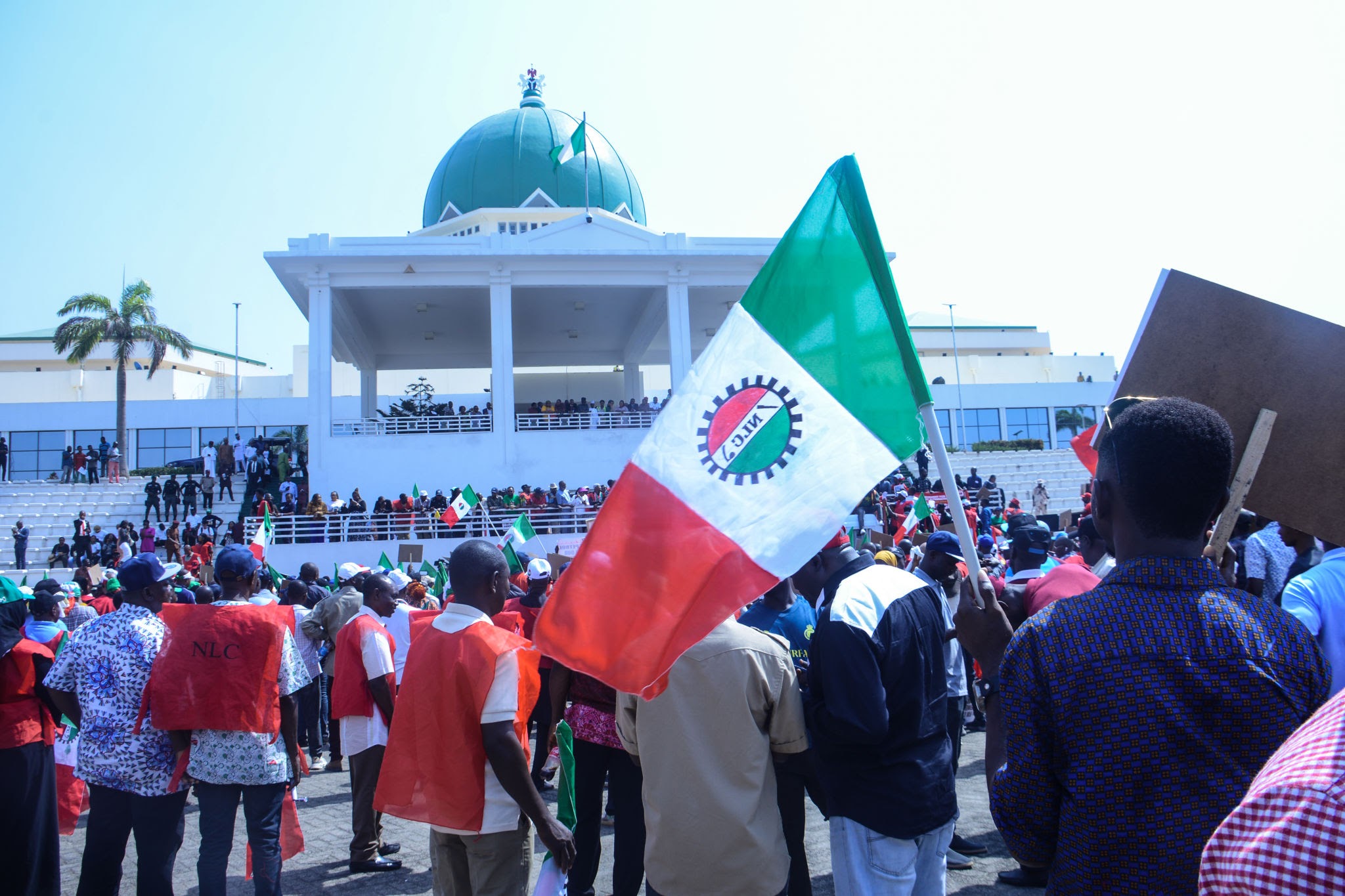
Why Subnational Rates Are Fueling Abuja’s Wage Crisis: Labour leaders at the Nigeria Labour Congress (NLC) and Trade Union Congress (TUC) are actively using states like Imo (₦104,000) and Ebonyi (₦90,000) as leverage. Their argument is straightforward: if state governments can afford ₦85,000 to ₦104,000, the Federal Government has little excuse to keep its entry-level baseline pegged at ₦70,000.
READ ALSO: How TraderTraitor Hacks Crypto Exchanges: Inside North Korea’s $6.3B Binance Heist Tactics
The Bottom Line
Nigeria no longer operates under a single uniform pay reality. While workers in states like Imo, Ebonyi, Lagos, and Rivers enjoy substantially higher floors, civil servants in baseline states are counting on the ongoing federal review committee in Abuja to force another nationwide upward shift before 2027.
Follow Gossiphome TV for daily updates on Nigerian politics, labour negotiations, and economic news.